Laxmikant Shetgaonkar | Offcial Website
cryptocurrency market
Cryptocurrency market
On 6 August 2014, the UK announced its Treasury had commissioned a study of cryptocurrencies and what role, if any, they could play in the UK economy. The study was also to report on whether regulation should be considered https://netent-software.com/. Its final report was published in 2018, and it issued a consultation on cryptoassets and stablecoins in January 2021.
After the early innovation of bitcoin in 2008 and the early network effect gained by bitcoin, tokens, cryptocurrencies, and other digital assets that were not bitcoin became collectively known during the 2010s as alternative cryptocurrencies, or “altcoins”. Sometimes the term “alt coins” was used, or disparagingly, “shitcoins”. Paul Vigna of The Wall Street Journal described altcoins in 2020 as “alternative versions of Bitcoin” given its role as the model protocol for cryptocurrency designers. A Polytechnic University of Catalonia thesis in 2021 used a broader description, including not only alternative versions of bitcoin but every cryptocurrency other than bitcoin. As of early 2020, there were more than 5,000 cryptocurrencies.
Some miners pool resources, sharing their processing power over a network to split the reward equally, according to the amount of work they contributed to the probability of finding a block. A “share” is awarded to members of the mining pool who present a valid partial proof-of-work.
Stablecoins are cryptocurrencies pegged to stable assets like fiat currencies or commodities to minimize price volatility. They are commonly used for trading or remittances. Examples of stablecoins include Tether (USDT), USD Coin (USDC) and Dai (DAI).
Hawk tuah girl cryptocurrency lawsuit
‘They wanted to see my phone, so I was like, “OK, well, that’s not a problem,”‘ Welch said, adding that they interrogated her about everything related to the cryptocurrency and the people she discussed it with over the phone. ‘They went through my phone, so they cleared me. I was good to go,’ she noted.
Sean O’Driscoll is a Newsweek Senior Crime and Courts Reporter based in Ireland. His focus is reporting on U.S. law. He has covered human rights and extremism extensively. Sean joined Newsweek in 2023 and previously worked for The Guardian, The New York Times, BBC, Vice and others from the Middle East. He specialized in human rights issues in the Arabian Gulf and conducted a three-month investigation into labor rights abuses for The New York Times. He was previously based in New York for 10 years. He is a graduate of Dublin City University and is a qualified New York attorney and Irish solicitor. You can get in touch with Sean by emailing s.odriscoll@newsweek.com. Languages: English and French.
Welch then provided a link to a form that affected investors can fill out on the website of cryptocurrency litigator Burwick Law, the firm that is representing the plaintiffs suing the creators of $HAWK.
The murky group behind “Hawk Tuah” girl Haliey Welch’s meme coin — which crashed hours after its launch — was sued by investors for failing to register the cryptocurrency, according to court records filed Thursday.
Welch became famous after she was filmed by YouTube creators using the onomatopoeic phrase “hawk tuah” to describe a spitting action used in a sexual context. She has since transformed her newfound fame into a successful merchandise line and the podcast Tuah Talk, where she has interviewed musician Wiz Khalifa and Shark Talk investor Mark Cuban.
Cryptocurrency bitcoin price
Bitcoin is used as a digital currency for peer-to-peer electronic transactions and traded for goods or services with vendors who accept Bitcoins as payment. In fact, Bitcoin spearheaded the cryptocurrency market, an ever-growing collection of digital assets that can be sent and received by anyone anywhere in the world without reliance on intermediaries.
Bitcoin’s protocol limits its supply, effectively creating a predefined monetary policy, and sets this limit at a total of 21,000,000 BTC. This is an amount that is yet to be reached, because Bitcoins are still being created as a reward for miners.
Here at CoinMarketCap, we work very hard to ensure that all the relevant and up-to-date information about cryptocurrencies, coins and tokens can be located in one easily discoverable place. From the very first day, the goal was for the site to be the number one location online for crypto market data, and we work hard to empower our users with our unbiased and accurate information.
Play-to-earn (P2E) games, also known as GameFi, has emerged as an extremely popular category in the crypto space. It combines non-fungible tokens (NFT), in-game crypto tokens, decentralized finance (DeFi) elements and sometimes even metaverse applications. Players have an opportunity to generate revenue by giving their time (and sometimes capital) and playing these games.
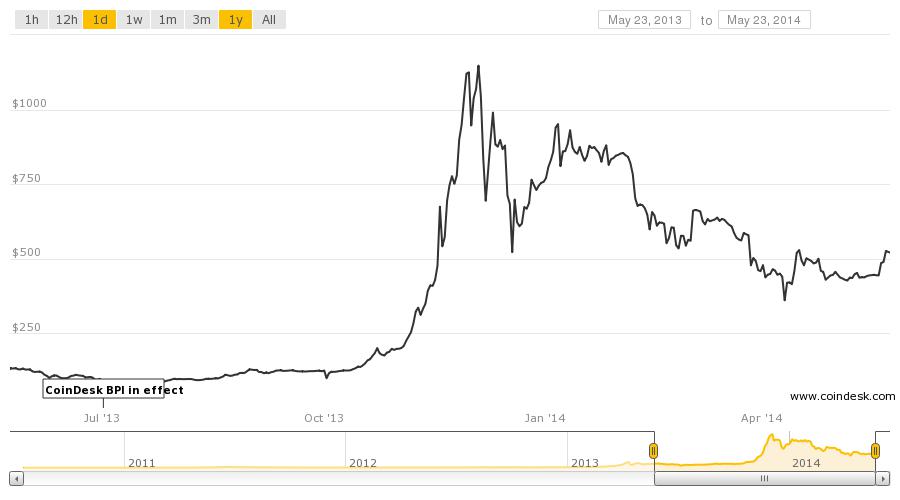
Bitcoin is used as a digital currency for peer-to-peer electronic transactions and traded for goods or services with vendors who accept Bitcoins as payment. In fact, Bitcoin spearheaded the cryptocurrency market, an ever-growing collection of digital assets that can be sent and received by anyone anywhere in the world without reliance on intermediaries.
Bitcoin’s protocol limits its supply, effectively creating a predefined monetary policy, and sets this limit at a total of 21,000,000 BTC. This is an amount that is yet to be reached, because Bitcoins are still being created as a reward for miners.
Pi network cryptocurrency
The project has moved step-by-step: first setting up the basics and growing its community (Beta), then a Testnet, followed by the Enclosed Mainnet (which started in December 2021), and now, the Open Mainnet.
AMBCrypto’s content is meant to be informational in nature and should not be interpreted as investment advice. Trading, buying or selling cryptocurrencies should be considered a high-risk investment and every reader is advised to do their own research before making any decisions.
More than 35 people are said to be on the Pi Core Team. While the founders have impressive backgrounds, whether the project truly succeeds will depend on if they can deliver on their lofty goals and if Pi coins become genuinely useful.
On a different note, Pi Network’s supporters highlight its innovative mining mode and great community. They justify the slow development pace by saying that it’s a cautious strategy for long-term success.
Dr. Nicolas Kokkalis, leading the tech side, earned his Computer Science PhD at Stanford, where he also taught the university’s first course on decentralized apps. His work has focused on making distributed systems and human-computer interaction play well together. Interestingly, he cooked up a smart contract framework even before Ethereum came along and also co-founded StartX, a startup incubator connected to Stanford.