Laxmikant Shetgaonkar | Offcial Website
Yadavindra Gardens, Pinjore Garden Pinjore Haryana
Yadavindra Gardens, Pinjore Garden Pinjore Haryana
Tourists from all over the world visit the Pinjore gardens to experience this Mughal creation that India has very proudly and carefully maintained. This includes time to explore the different sections of the garden, relax by the fountains, take photos, and enjoy a peaceful walk through the well-maintained pathways. The best time to visit Yadavindra Gardens, Pinjore is during the winter months, from October to March. The place is a stunning blend of Mughal grandeur and the tranquil beauty of nature, making it one of the best gardens in India for visitors to explore.
Patiala
If you plan to visit nearby attractions like Mansa Devi Temple or Sukhna Lake, you should allocate additional time, making the trip last a half-day or more. The summer months (April to June) can be quite hot, with temperatures reaching above 40°C (104°F), making it less comfortable to explore the gardens. The gardens Yadavindra Gardens are particularly beautiful during the Rangoli Festival, which is usually held in December, when the garden is adorned with colorful designs made from flowers and other materials. The weather during this period is pleasant and ideal for exploring the gardens and enjoying outdoor activities. The garden is famous for its cascading fountains, ornate pavilions, and the impressive layout that harmonizes nature with architecture.
🌺 Pinjore Gardens (Yadavindra Gardens) – A Mughal Paradise in Haryana
- During the visit to the Pinjore garden, one may also taste the local Haryanvi food.
- The garden stretches over a massive area of 100 acres and is a beautiful place to unwind with nature amid the ever-growing concrete city.
- The garden has various types of boats, such as paddle boats, row boats, and motor boats, that can be rented for a nominal fee.
- The next terrace is known for its beautiful surroundings since it contains a fountain bed along with a platform where we can relax and admire the view.
- One may plan a visit to the city in February as one will get to witness beautiful flowers blooming in the divine ambiance of the garden.
The garden is known for its seven terraces that make the garden more appealing and add a touch of magic to it. The gardens have been renamed Yadavindra Garden as a tribute to the Maharaja and his devotion to the place. The gardens were originally laid out in the 17th century by the then Mughal governor of Punjab, Nawab Fidai Khan.
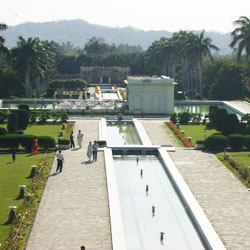
Maharaja Yadavindra Singh restored the garden to its former grandeur. The Maharaja used this magnificent garden to grow roses for the making of perfume. It depends on when you visit!
- At present, the garden is undergoing a conservation process and various beautification projects are in progress.
- The Yadavindra Garden is very good place to visit.
- It is an instance of the Mughal Gardens style, and changed into constructed via way of means of Patiala Dynasty Rulers.The lawn is withinside the village of Pinjore lie 22 km from Chandigarh at the Ambala-Shimla avenue.
- Click on the links below to follow Yadavindra Gardens on various social media platforms.
- These terraces are adorned with lush greenery, vibrant flowerbeds, and majestic trees, providing a serene and picturesque environment.
- With its sprawling terraced lawns, cascading fountains, and ornate palaces, Yadavindra Gardens transports visitors to a world of serenity and splendor.
Best Time to Visit Yadavindra Gardens

Pinjore Gardens (also known as Pinjor Gardens or Yadavindra Gardens) is located in Pinjore, Panchkula district in the Indian state of Haryana. The garden is decorated with lights, cutouts, platforms, decorated gates and illuminations. In the evening, artistes from the North Zone Cultural Centre present a colourful cultural programme of folk songs and dances, such as Haryanvi music and dance, Punjabi music, Folk dances of Punjab, Himachali folk dances and Indian classical dance. During the day students from different schools perform various competitive cultural programs, such as dance, music, rangoli, etc.